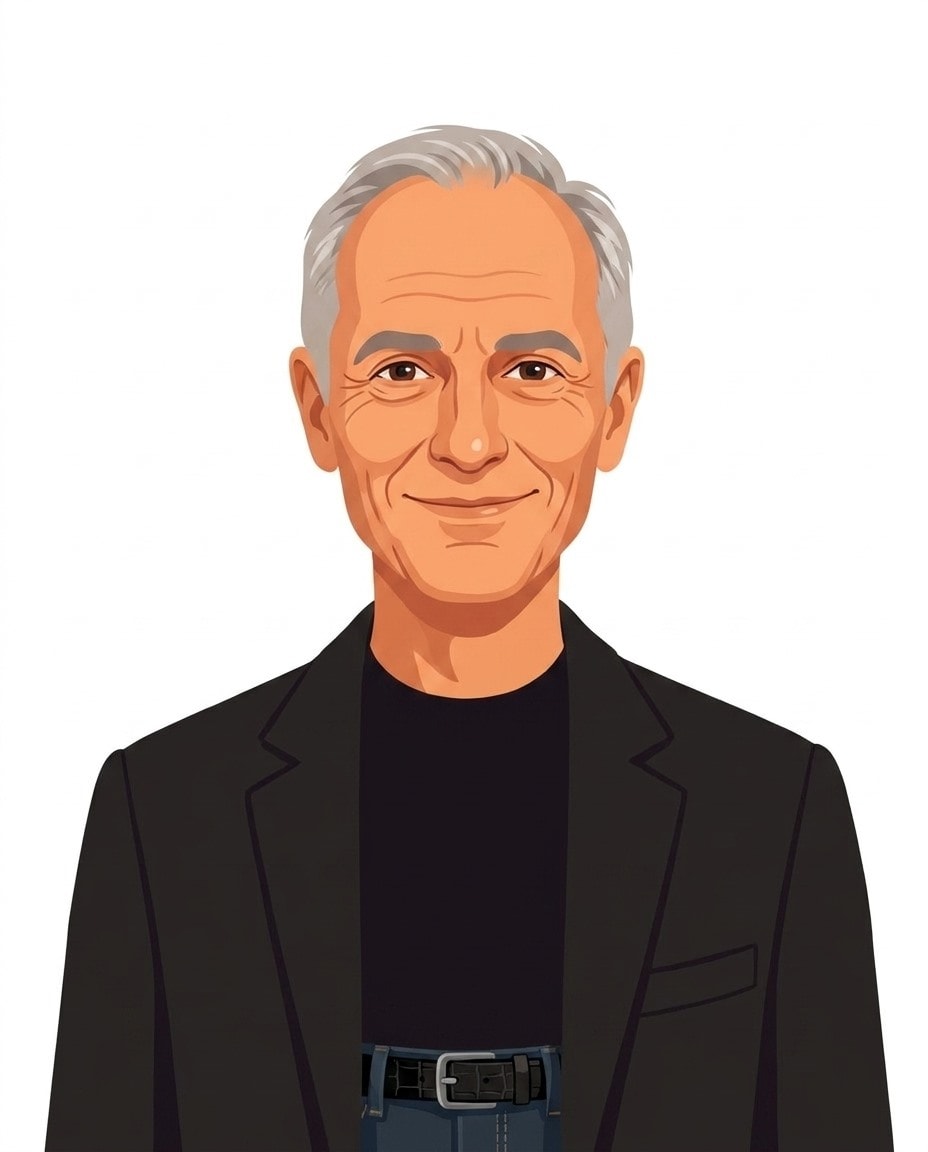
Daniel Amen
Psychiatrist · Change Your Brain, Change Your Life
Double board-certified psychiatrist and founder of Amen Clinics, whose brain SPECT database now runs to hundreds of thousands of scans from patients in 155 countries. Across his bestsellers and 19 public television specials he presses one argument: most psychiatric problems are brain health problems. He scanned his own brain in 1991, did not like what he saw, and rebuilt his days around sleep, walking, ping pong and a nightly gratitude habit. He founded the supplement company BrainMD and co-hosts Change Your Brain Every Day with his wife Tana.
- Entries
- 25
- Does
- 8
- Recommends
- 17
- Discusses
- 0
Supplements
5 supplements in this stack
- SupplementRecommends$$$Cheap: Roughly under $50, or under $15/month.
Magnesium (threonate or glycinate)
Magnesium turns up twice on his teaching arm's supplement page: among the multivitamin nutrients it wants covered, and in the calming group it pairs with theanine and valerian root under his brain type framework.
Source: Amen University: How Nutritional Supplements Support Brain HealthView item: Magnesium (threonate or glycinate)On record from 11 of 62 tracked people: 8 do it, 1 recommends it, 2 have discussed it - SupplementRecommends$$$Cheap: Roughly under $50, or under $15/month.
Omega-3 (EPA/DHA)
He says he thinks all of his patients should be on an omega-3 supplement, on the grounds that it helps calm inflammation. Inflammation, in his telling, is a major cause of both depression and dementia, and it gets its own letter in his memory mnemonic.
Source: Thirty Minute Mentors: Dr. Daniel AmenView item: Omega-3 (EPA/DHA)On record from 9 of 62 tracked people: 8 do it, 1 recommends it - SupplementRecommends$$$Cheap: Roughly under $50, or under $15/month.
Multivitamin
A good multivitamin is one of the three supplements his own teaching arm puts at the base of a brain routine. B vitamins, vitamin C, magnesium and zinc are the reason given, though the same page insists whole food comes first and calls the pill a gap filler.
Source: Amen University: How Nutritional Supplements Support Brain HealthView item: MultivitaminOn record from 6 of 62 tracked people: 5 do it, 1 recommends it - SupplementRecommends$$$Cheap: Roughly under $50, or under $15/month.
Vitamin D3
Up to 42% of Americans run insufficient, according to his university's supplement page, which suggests pairing D3 with magnesium and vitamin K2 rather than K1 for absorption. Sunlight comes first in the same piece, framed as a decent excuse for a walk outside.
Source: Amen University: How Nutritional Supplements Support Brain HealthView item: Vitamin D3On record from 6 of 62 tracked people: 5 do it, 1 recommends it - SupplementRecommends$$$Cheap: Roughly under $50, or under $15/month.
Saffron
Saffron is the supplement he sounds happiest about, and he ties it to his Lebanese background and to a piece of Iranian folklore about people who seem too cheerful. He told Fox News that research he has read puts it on a par with antidepressants, and named zinc and curcumin as a pairing he likes.
Source: Fox News: Common spice may beat depression and boost sexual health, doctor saysView item: SaffronOn record from 1 of 62 tracked people: 1 recommends it
Books
3 books in this stack
- BookRecommends$$$Cheap: Roughly under $50, or under $15/month.
Change Your Brain, Change Your Life
The book that carried his imaging argument to a general readership. His own site says it has sold over a million copies, and that his books between them have been translated into 50 languages.
Source: Daniel Amen: Meet Dr. Daniel AmenView item: Change Your Brain, Change Your LifeOn record from 1 of 62 tracked people: 1 recommends it - BookRecommends$$$Cheap: Roughly under $50, or under $15/month.
Memory Rescue
Asked on a leadership podcast for memory tips, he pointed straight at this one and then worked through the mnemonic behind it. Prevent or treat the eleven major risk factors that steal your mind, he says, and the letters of BRIGHT MINDS tell you which eleven.
Source: Thirty Minute Mentors: Dr. Daniel AmenView item: Memory RescueOn record from 1 of 62 tracked people: 1 recommends it - BookRecommends$$$Cheap: Roughly under $50, or under $15/month.
The Daniel Plan
Co-written with Pastor Rick Warren and Dr. Mark Hyman, and billed on his own site as a number one New York Times bestseller. The church program behind it, that page says, has been implemented in thousands of congregations worldwide.
Source: Daniel Amen: Meet Dr. Daniel AmenView item: The Daniel PlanOn record from 1 of 62 tracked people: 1 recommends it
Protocols
8 entriesStructured routines and practices with a defined method.
Bed at 10 p.m., up at 6:30 a.m., the same times every night through lockdown. Like most doctors, CNBC noted, he puts sleep near the front of the queue, and the fixed hours set up everything else in his morning.
Source: CNBC Make It: Ping pong, walks and mind exercises: Brain-boosting habits of a renowned brain doctor during self-quarantineLockdown meant a lot of ping pong with his teenage daughter, and he calls the game one of the world's best brain games. He pointed CNBC at a small study in which people with Parkinson's who played once a week for six months showed improvement in their symptoms.
Source: CNBC Make It: Ping pong, walks and mind exercises: Brain-boosting habits of a renowned brain doctor during self-quarantineStrength training closes out the Amen Clinics list of five exercises for brain health, behind table tennis, swimming, dancing and yoga. The post cites a University of Sydney trial in which six months of lifting tracked with protection in brain areas hit early by Alzheimer's.
Source: Amen Clinics: These 5 Physical Activities Improve Brain HealthSweating is how he thinks about clearing toxins, so saunas sit in his detox list next to water, fiber and brassicas. Infrared gets a specific mention, and he says they have been found to have an effect on mood.
Source: Thirty Minute Mentors: Dr. Daniel AmenCooler room, no light, regular bedtime. He suggests walking around the bedroom to kill every standby lamp, since for a lot of people the place looks a bit like New York City at night once you start counting the gadgets.
Source: Thirty Minute Mentors: Dr. Daniel AmenOn Dan Buettner's podcast he ran through what he recommends for a healthy brain, and CNBC's write-up puts avoiding pro-inflammatory foods, sugar and processed food on the list. Exercise, new learning, omega-3s, sleep and knowing your family health history sit on it too.
Source: CNBC Make It: This is the single biggest mistake you're making that's hurting your brain health, psychiatrist saysANTs are automatic negative thoughts, and the name is his. He told CNBC that the worst thing anyone can do in a hard stretch is believe every stupid thing they think, and that watching too much news loads the file up. Catch the thought, write it down, then question whether it is actually true.
Source: CNBC Make It: Ping pong, walks and mind exercises: Brain-boosting habits of a renowned brain doctor during self-quarantineAn exercise he says he developed in the middle of the 1980s. One piece of paper, what you want under relationships, work, money and physical, emotional and spiritual health, then a daily question about whether your behavior is getting you any of it. Knowing what you want, he told Thirty Minute Mentors, is step number one.
Source: Thirty Minute Mentors: Dr. Daniel Amen
Habits
9 entriesRecurring behaviors recorded in public statements.
Running a chain of clinics means a day full of conference calls. CNBC reported that he makes a point of never sitting down for one, and walks and talks instead.
Source: CNBC Make It: Ping pong, walks and mind exercises: Brain-boosting habits of a renowned brain doctor during self-quarantineIn bed he asks what went well today, and says he puts himself to sleep celebrating the best part of it. He has kept the habit for years, including the night his father died, and says he cannot remember a day it turned up nothing that made him smile.
Source: Thirty Minute Mentors: Dr. Daniel AmenPrayer comes first in his bedtime sequence, just ahead of the what-went-well review. A spiritual circle sits alongside the biological, psychological and social ones in his four circles model, and he notes that very few psychiatrists ever talk about that one.
Source: Thirty Minute Mentors: Dr. Daniel AmenTen thousand steps a day is the number he says he makes an effort to hit. He told CNBC it is not only exercise, it is a brain habit.
Source: CNBC Make It: Ping pong, walks and mind exercises: Brain-boosting habits of a renowned brain doctor during self-quarantineFirst thing on waking he tells himself the day is going to be a great day, then lets his brain go hunting for reasons that is true. He is careful about the label: not a positive thinker, he says, an accurate one, and he cites Jim Collins on the prisoners of war who died expecting to be home by Christmas.
Source: Thirty Minute Mentors: Dr. Daniel AmenThrough the day he runs choices past one question: is this good for my brain or bad for it. He calls it the most important of his tiny habits, and says the answer he lands on is almost always the loving one, since a damaged brain makes you a burden to the people you care about.
Source: Thirty Minute Mentors: Dr. Daniel AmenCaffeine, alcohol and marijuana all land on his not-a-fan list, because he says they pollute sleep. When the American Cancer Society came round to saying people should not drink at all, alcohol being a risk factor for seven cancers, he headlined his blog post about it I Told You So.
Source: Thirty Minute Mentors: Dr. Daniel AmenBlue light in the morning is fine and probably helpful, he says. After dark it is a different matter, since the gadgets pouring it into your brain turn off melatonin production, so he wants them out of the way. A noisy room, a light room and a warm room get named as sleep wreckers too.
Source: Thirty Minute Mentors: Dr. Daniel AmenNew learning has to be part of everyone's life, he argues, and repeating the same day forever is the thing to avoid. An instrument, a language, gardening, cooking, anything unfamiliar, fifteen minutes a day.
Source: Thirty Minute Mentors: Dr. Daniel Amen
In their own words
Checked word for word against the linked source
“So I have all sorts of little tiny habits. They take me through my day. And the first one is when I wake up in the morning, actually on the top of my to do. And I say to myself, today is going to be a great day. And then my brain finds why that’s going to be true.”
Thirty Minute Mentors: Dr. Daniel Amen (opens in a new tab) · 26 Feb 2021 “I say a prayer. And then I go, what went well today? … So I put myself to sleep celebrating the best part of my day.”
Thirty Minute Mentors: Dr. Daniel Amen (opens in a new tab) · 26 Feb 2021 “I have another question I ask myself. Is this good for my brain, or bad for it? And not always, but almost always I choose the most loving answer, which is I do things that are good for my brain because I love myself.”
Thirty Minute Mentors: Dr. Daniel Amen (opens in a new tab) · 26 Feb 2021 “I had bad habits. I was only getting four hours of sleep at night. I was overweight, and I had just never really thought about the physical health of my brain.”
CNBC Make It: This is the single biggest mistake you're making that's hurting your brain health, psychiatrist says (opens in a new tab) · 23 Sep 2025 “I love saffron so much … I'm Lebanese, and Middle Eastern folks cook with a lot of saffron. And there's actually folklore in Iran: If you're too happy, you must have had saffron.”
Fox News: Common spice may beat depression and boost sexual health, doctor says (opens in a new tab) · 19 Nov 2025 On Saffron
Episodes from the feed
Show archive, Change Your Brain Every Day (opens in a new tab)Last fetched . A title without a link is an episode the feed publishes no page of its own for.
- It's Your Time to Heal: God's Steps with Pastor Derwin Gray (opens in a new tab) · 32m
- She Lost Her Arm But Found a Stronger Brain. Bethany Hamilton's Incredible Post-Traumatic Growth Journey (opens in a new tab) · 40m
- Your Brain's Silent War: Dr. David Perlmutter on the Immune Cells That Make or Break Your Mind (opens in a new tab) · 54m
- The Second Beginning: Life After Traumatic Brain Injury with Erik Johnson (opens in a new tab) · 56m
- A EMDR Therapy Session with Tish Cyrus (opens in a new tab) · 17m
Stack notes are paraphrased. Anything in quotation marks is a short excerpt copied from the transcript it links to. Not medical advice. Not affiliated with, endorsed by, or reviewed by anyone listed. How this works.