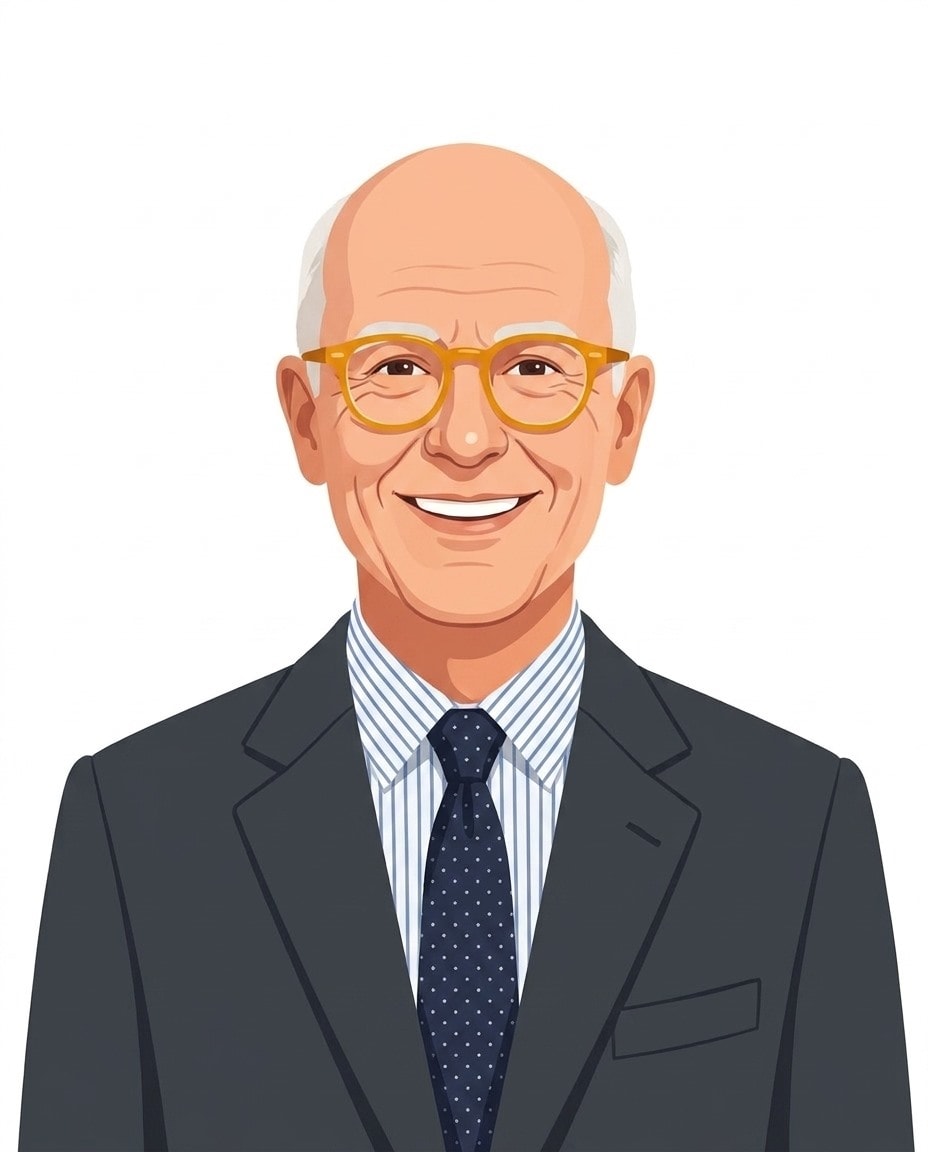
Seth Godin
Author · Seth's Blog, published daily
Marketing writer. A post has gone up on his blog every day for more than a decade, and the count is approaching 10,000. More than twenty of his books have been bestsellers, among them Permission Marketing, Purple Cow, Linchpin and The Practice. Every word is his own, he says. The rules he works by are mostly subtractions: no meetings, no television on his own, no Facebook or Twitter. He created the altMBA, edits The Carbon Almanac and hosts the Akimbo podcast.
- Entries
- 33
- Does
- 18
- Recommends
- 15
- Discusses
- 0
Books
10 books in this stack
- BookRecommends$$$Cheap: Roughly under $50, or under $15/month.
Linchpin
Names it as his most important book. The question it puts to a reader is whether they will be more than a cog: someone whose absence would be noticed, doing work that counts.
Source: seths.blog: BooksView item: LinchpinOn record from 1 of 62 tracked people: 1 recommends it - BookRecommends$$$Cheap: Roughly under $50, or under $15/month.
Permission Marketing
Wrote it when email marketing was not yet an industry at all, as he tells it. He still stands behind the core of the argument: connection is the building block of the internet, and messaging works when it is anticipated, personal and relevant.
Source: seths.blog: BooksView item: Permission MarketingOn record from 1 of 62 tracked people: 1 recommends it - BookRecommends$$$Cheap: Roughly under $50, or under $15/month.
Purple Cow
By his own account the bestselling marketing book of its decade, built on one method: spread an idea by making the thing itself remarkable.
Source: seths.blog: BooksView item: Purple CowOn record from 1 of 62 tracked people: 1 recommends it - BookRecommends$$$Cheap: Roughly under $50, or under $15/month.
The Art of Possibility
Sits on the same short list, next to Dan Pink and Tom Peters. He calls those authors classics in the field and says his own life is better for knowing them, so he is recommending friends as well as books.
Source: seths.blog: Books for the journeyView item: The Art of PossibilityOn record from 1 of 62 tracked people: 1 recommends it - BookRecommends$$$Cheap: Roughly under $50, or under $15/month.
The Dip
Sums it up himself as a book about the real upsides of quitting, and about what it is worth to be seen as the best in the world at something.
Source: seths.blog: BooksView item: The DipOn record from 1 of 62 tracked people: 1 recommends it - BookRecommends$$$Cheap: Roughly under $50, or under $15/month.
The Practice
An instant bestseller in 2020, by his description, and his book about shipping creative work. The question he attaches to it is whether that is the work you want to be doing.
Source: seths.blog: BooksView item: The PracticeOn record from 1 of 62 tracked people: 1 recommends it - BookRecommends$$$Cheap: Roughly under $50, or under $15/month.
The War of Art
One of the handful of books he says he goes back to again and again rather than reading once, and hands out to colleagues expecting them to pass it on. Pressfield is a friend as well as an author on that list, which he states plainly when he shares it.
Source: seths.blog: Books for the journeyView item: The War of ArtOn record from 1 of 62 tracked people: 1 recommends it - BookRecommends$$$Cheap: Roughly under $50, or under $15/month.
This Is Marketing
Calls it the bestselling marketing book since Purple Cow, and pitches it at strategy rather than tactics, for readers trying to work out how a culture picks up an idea.
Source: seths.blog: BooksView item: This Is MarketingOn record from 1 of 62 tracked people: 1 recommends it - BookRecommends$$$Cheap: Roughly under $50, or under $15/month.
This Is Strategy
Defines strategy as a philosophy of becoming rather than a set of tactics, and not as winning in the short run. What it takes, he says, is clarity about the change you want to make and who you want to change, then a long commitment to the process while the tactics keep moving.
Source: The Tim Ferriss Show #792 transcriptView item: This Is StrategyOn record from 1 of 62 tracked people: 1 recommends it - BookRecommends$$$Cheap: Roughly under $50, or under $15/month.
Tribes
Puts the tools of leadership in everyone's hands, on his own summary, leaving only the question of whether a person will choose to use them. He also credits it with describing fractures in the culture years before they were obvious.
Source: seths.blog: BooksView item: TribesOn record from 1 of 62 tracked people: 1 recommends it
Gear
9 pieces of gear in this stack
- GearDoes it$$$Expensive: Several hundred dollars and up.
MacBook Pro
His rider is plain about it: the presentation does not run on any computer but his. He brings an M1 MacBook Pro, his own VGA/HDMI adapter and a USBc dongle, and asks the venue for a standard HDMI cable and AC power within six feet of the machine.
Source: seths.blog: 2022 Rider for Seth GodinVisit apple.com (opens in a new tab)On record from 4 of 62 tracked people: 4 do it - GearDoes it$$$Cheap: Roughly under $50, or under $15/month.
Lavalier microphone
Every venue gets the same request: a wireless lavalier, clipped to a tie, on a belt pack, and not an earpiece. He says he cannot do a good job on a wired, handheld or podium mic. He also travels with his own Countryman-style mic and offers it if the venue prefers.
Source: seths.blog: Seth Godin's RiderView item: Lavalier microphoneOn record from 2 of 62 tracked people: 2 do it - GearDoes it$$$Expensive: Several hundred dollars and up.
Glowforge laser cutter
He owns one, and says he was bad at it for a long time and is getting better. His example: he disliked a sign in his building lobby, so he made a replacement, and went through 18 versions before it looked professional. He rates it as a Kickstarter machine that actually works.
Source: Cool Tools Show 196: Seth GodinVisit glowforge.com (opens in a new tab)On record from 1 of 62 tracked people: 1 does it - GearDoes it$$$Cheap: Roughly under $50, or under $15/month.
Levoit air purifier
Two of them: one next to the stove, one next to the laser cutter. He cooks lunch for his office every day, the dosas smoke, and this is what he presses a button on to clear it. Five minutes at a time is all he runs it for, so the carbon filter has lasted.
Source: Cool Tools Show 196: Seth GodinVisit levoit.com (opens in a new tab)On record from 1 of 62 tracked people: 1 does it - GearDoes it$$$Mid: Roughly $50 to $500, or up to $50/month.
Marantz microphone
The microphone in his studio is a Marantz on phantom power, feeding a Tascam preamp. He lists it beside the camera, the lights and an ATEM mixer as the kit behind the virtual talks he now does in place of travel.
Source: seths.blog: Seth Godin's RiderView item: Marantz microphoneOn record from 1 of 62 tracked people: 1 does it - GearDoes it$$$Expensive: Several hundred dollars and up.
Pacojet
He keeps one and freezes a vegan mix for it: four kinds of nuts, dates and cocoa powder. His verdict is that nothing else makes ice cream this well, with the caveat attached in the same breath, that it only makes sense if you care a lot about homemade ice cream.
Source: Cool Tools Show 196: Seth GodinVisit pacojet.com (opens in a new tab)On record from 1 of 62 tracked people: 1 does it - GearDoes it$$$Cheap: Roughly under $50, or under $15/month.
Softbox LED light
Writing in the first person about the technology in his studio, he lists soft-box LED lights alongside the camera, a Marantz microphone, a preamp and a mixer. That studio is how he works now: he stopped flying for business in 2020 and moved his speaking to filmed and live video.
Source: seths.blog: Seth Godin's RiderView item: Softbox LED lightOn record from 1 of 62 tracked people: 1 does it - GearDoes it$$$Expensive: Several hundred dollars and up.
Sony Alpha 7
Listing what his studio holds, he names a Sony Alpha 7 35mm camera with a portrait lens. It is the video source for the virtual talks he does instead of travel, and he says he has done more than 300 Zoom calls in production environments with no issues.
Source: seths.blog: Seth Godin's RiderView item: Sony Alpha 7On record from 1 of 62 tracked people: 1 does it - GearDoes it$$$Mid: Roughly $50 to $500, or up to $50/month.
Teleprompter beam splitter
He calls this the biggest leap in his call rig since he started hiding his own self-view. The reasoning: look at the camera and you are not looking at the person, and a day with no eye contact leaves you tired. He puts a typical beam splitter, hood, mount and a monitor at under $300.
Source: seths.blog: Fixing Zoom callsView item: Teleprompter beam splitterOn record from 1 of 62 tracked people: 1 does it
Apps
3 apps in this stack
- AppDoes it$$$Cheap: Roughly under $50, or under $15/month.
Claude
Uses AI every day for more than an hour, and says Claude is the one he actually talks to, partly because it warns him when it might be making something up. The method he describes is narrow: hand it three bullet points, ask for four more, then rewrite them himself.
Source: The Tim Ferriss Show #792 transcriptVisit claude.ai (opens in a new tab)On record from 5 of 62 tracked people: 5 do it - AppDoes it$$$Cheap: Roughly under $50, or under $15/month.
Perplexity
Searches with Perplexity almost exclusively, and says he has nearly stopped using a conventional search engine. The writing stays his own, he is firm about that, whatever he uses to think alongside.
Source: The Tim Ferriss Show #792 transcriptVisit perplexity.ai (opens in a new tab)On record from 2 of 62 tracked people: 2 do it - AppDoes itFREE, no cost
Keynote
Slides are built in Keynote and run off his own M1 MacBook Pro. His rider states that the presentation will not run on any other computer, and asks the tech team to have his intro slide up on screen well before he walks on.
Source: seths.blog: 2022 Rider for Seth GodinVisit apple.com (opens in a new tab)On record from 1 of 62 tracked people: 1 does it
Protocols
4 entriesStructured routines and practices with a defined method.
Never goes over budget and never misses a deadline. He frames it as choosing to be a professional rather than as a knack. Run out of money or time and the project ends there. By his account the code cuts out the pleading and the borrowing from one line to pay another, and taking a job on with it in place leaves you far more focused.
Source: The Tim Ferriss Show #837 transcriptSeparates being creative from shipping the result, calling them different skills with different fears attached. Anonymous work feels easy because nobody can react to it; the risk turns up the moment someone might. Working out which of the two is holding you back is the step he suggests first.
Source: seths.blog: Shipping creative workArgues for deciding when you will quit before the market decides for you. Walking away early to pick your next move beats losing slowly in a dip he reads as unsurvivable. He grants that it feels unnatural, which is exactly why he wants the call made in advance.
Source: seths.blog: The joy of quittingA stepping stone rather than a compromise, in his framing. Pick the specific people the work is for, make something they would miss if it vanished, and let them carry it to peers like themselves. He is blunt that this puts you on the hook more, not less, since a small audience notices when you coast.
Source: seths.blog: The smallest viable audience
Habits
7 entriesRecurring behaviors recorded in public statements.
Has written every word of the blog himself, and says he does not understand outsourcing something that personal. By his own count in late 2017 the total sat past 7,000 posts and 2.7 million words, with no day missed in many years. The secret he gives for a daily blog is to write every day, queue it up and publish.
Source: seths.blog: This is post 7,000Says he does not look at Facebook or Twitter, and his own rule is no social media unless a project needs it. Tim Ferriss asked which decisions would simplify a life; he named this alongside two other subtractions, then asked listeners how many hours a day dropping them would free up.
Source: The Tim Ferriss Show #837 transcriptEleven straight years of daily posts as of August 2019, and by his own reckoning no day missed since 2008. He describes the run as self-reinforcing: commitment hardens into a practice, the practice into a habit, and the daily question shifts from whether to post to what the post will say.
Source: seths.blog: StreaksGoes to no meetings, and the rule he offers everyone else is to skip one whenever a memo would do. In a big organization he reckons that alone saves thirty hours a week. Even a freelancer, he says, gets clearer by writing the thing down. Conversations he is in favor of.
Source: The Tim Ferriss Show #837 transcriptWatches no television on his own, one of four things he named as keeping his working life simple. He is careful about the trade in the same breath: give those hours up and the stakes rise, because you are then on the hook for something specific instead.
Source: The Tim Ferriss Show #837 transcriptHis advice is to go exactly when you least want to, because that is the walk that shifts your mood and gets you upright and moving. He adds a second use beyond the exercise: if there is a conversation you keep putting off, take that person along.
Source: seths.blog: Go for a walkTells readers to pick three things they will change at work before opening a business book, then read hunting for those three. Sticky notes, index cards or a highlighter are there to turn the reading into something to act on rather than a record to file, and he sets a three-week test: nothing done by then and the time was wasted.
Source: seths.blog: How to read a business book
In their own words
Checked word for word against the linked source
“Writer’s block isn’t hard to cure. Just write poorly. Continue to write poorly, in public, until you can write better. I believe that everyone should write in public.”
seths.blog: Talker's block (opens in a new tab) · 23 Sep 2011 “Streaks are their own reward. Streaks create internal pressure that keeps streaks going. Streaks require commitment at first, but then the commitment turns into a practice, and the practice into a habit. Habits are much easier to maintain than commitments.”
seths.blog: Streaks (opens in a new tab) · 8 Aug 2019 “For example, I don’t go to meetings. I don’t watch television on my own. I don’t look at Facebook or Twitter.”
The Tim Ferriss Show #837 transcript (opens in a new tab) · 28 Nov 2025 “And I use Perplexity exclusively. I almost never do a search with a search engine. Every word I publish, I wrote.”
The Tim Ferriss Show #792 transcript (opens in a new tab) · 31 Jan 2025 On Perplexity
“It’s not about getting found by everyone. A focus on experience creates something that (some) people want to look for.”
seths.blog: The smallest viable audience (opens in a new tab) · 22 May 2022
Episodes from the feed
Show archive, Akimbo: A Podcast from Seth Godin (opens in a new tab)Last fetched . A title without a link is an episode the feed publishes no page of its own for.
Stack notes are paraphrased. Anything in quotation marks is a short excerpt copied from the transcript it links to. Not medical advice. Not affiliated with, endorsed by, or reviewed by anyone listed. How this works.